



Forget Everything You Know: How 1688 Suppliers Redefined Product Selection for 2X Profit


Today, we are sharing the practical experience of a 1688 seller supplying cross-border markets, who uses "DianLeida" for data-driven product selection. This seller primarily focuses on the storage bags and organizers category, reviewing 50 to 100 potential new arrivals or trending hits at a time to strategically plan for the next quarter and increase the success rate of creating viral products.
"In the past, product selection relied on gut feeling; now, data allows us to quickly capture market trends. By combining these trends with our own supply chain advantages, we can lock in potential hits for the next season in advance. Next, I will share the step-by-step operational process for product selection."
Step 1: Digging for Market Trends
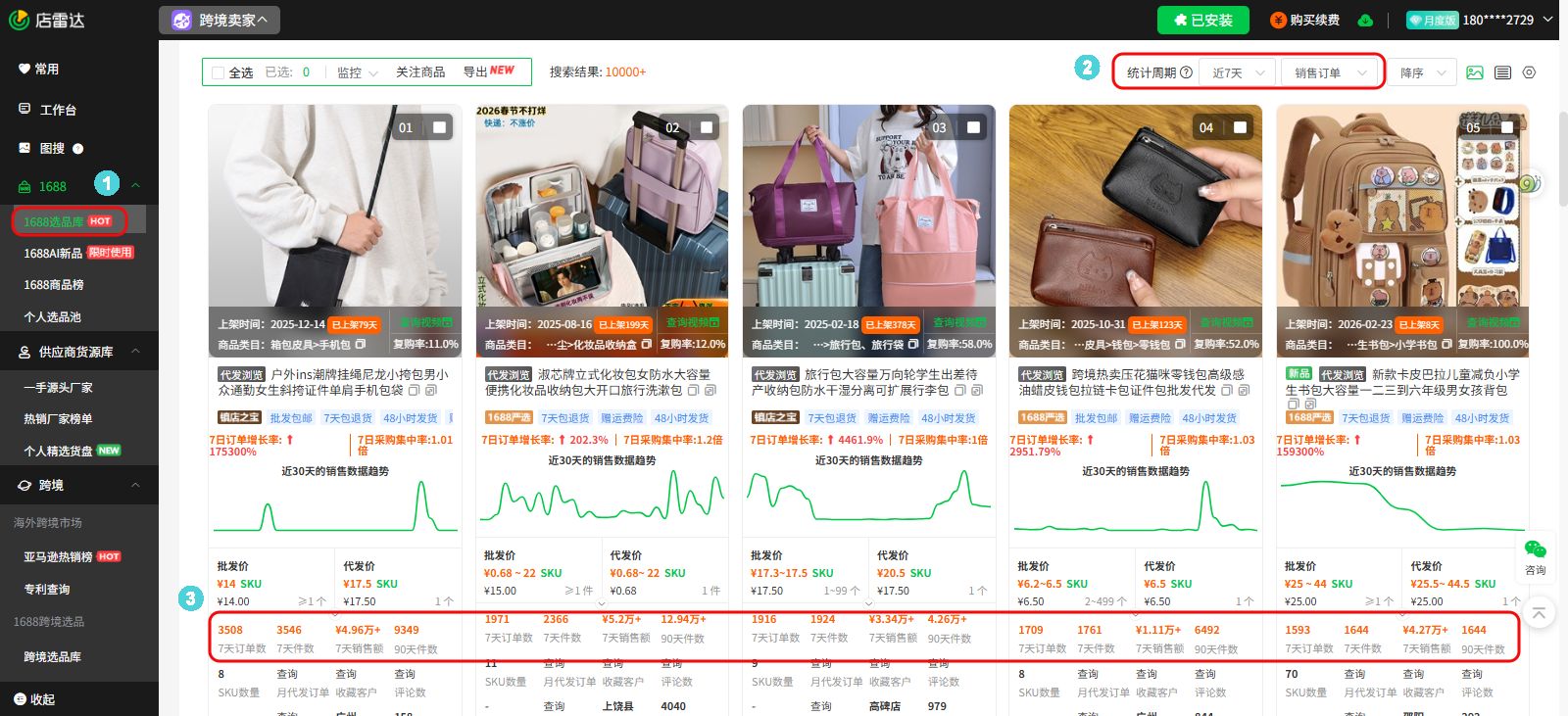
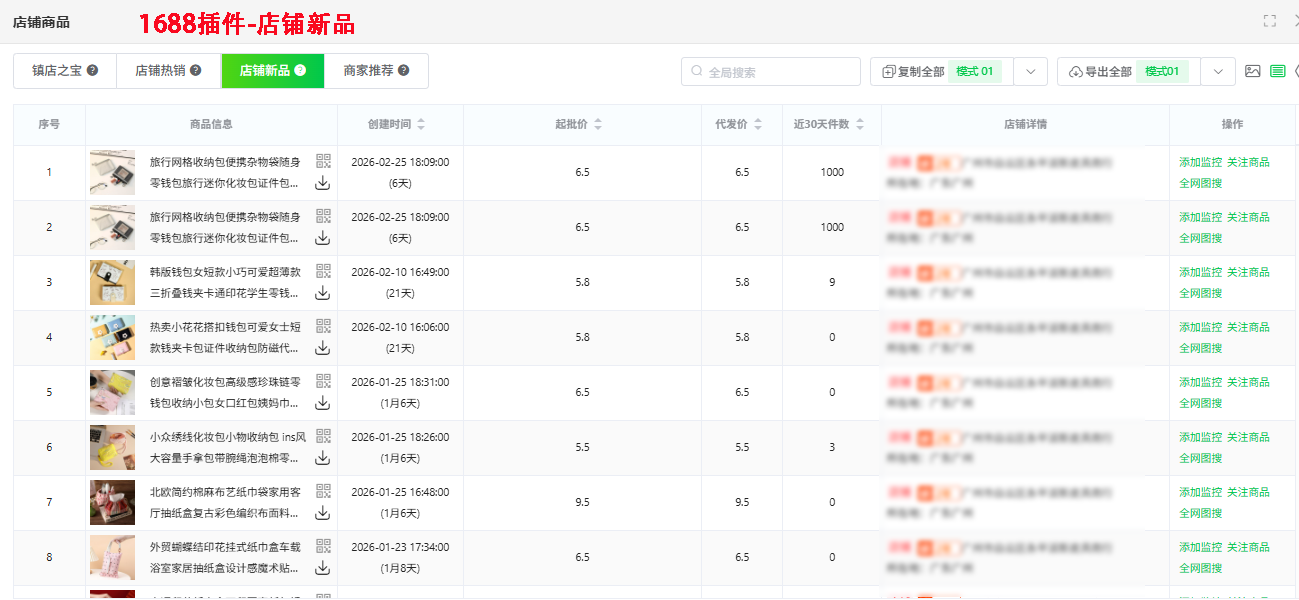
Every week, I consistently review the sales rankings in the 1688 product selection library to analyze the most popular items. At the same time, I use browser plugins to monitor new arrivals recently listed by competitors.
By comparing best-sellers with new products within the same category, I can judge current market directions and filter out high-potential candidates for the next round of analysis.
DianLeida suggests focusing primarily on sales order volume, as it more accurately reflects the actual sales performance of a product. By combining this with specific timeframes (such as the last 7 or 30 days), you can quickly identify trending items experiencing short-term explosive growth.
Additionally, pay close attention to when competitors list new products. If multiple stores are launching similar items during the same period, it indicates that the category is currently gaining significant market attention.
Step 2: In-depth Analysis of Sales and Trends
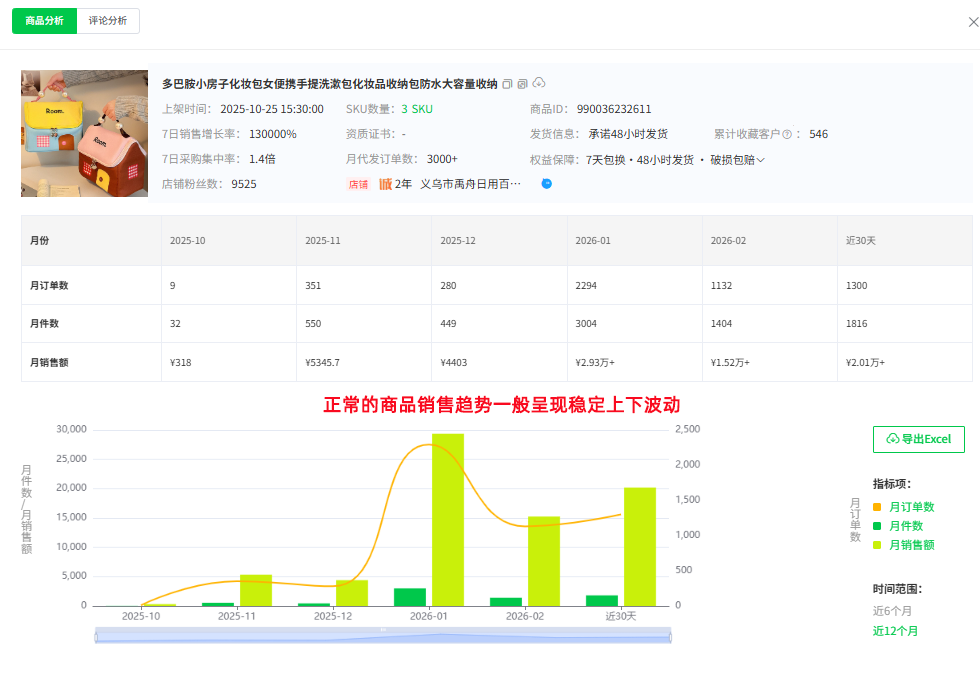
For the pre-screened products, further examine their sales revenue and trends. The priority is to eliminate links that show a sudden spike in sales on a single day (which may indicate "brushing" or fake orders) and instead select products that demonstrate consistent, stable growth or maintain high sales volume. This step typically filters out 60% of the noise, leaving the remaining products for a deep evaluation.
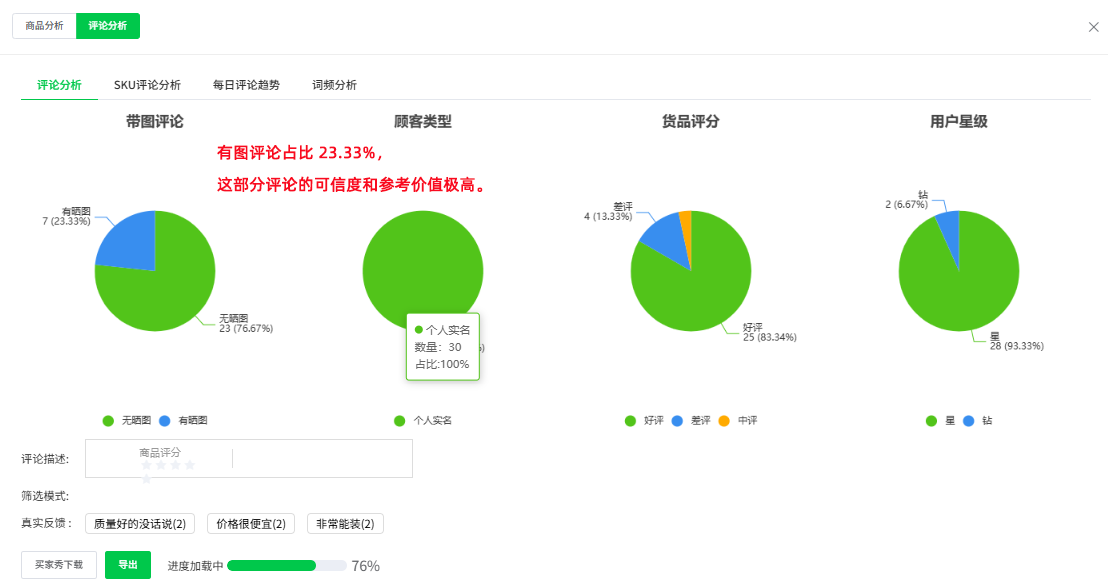
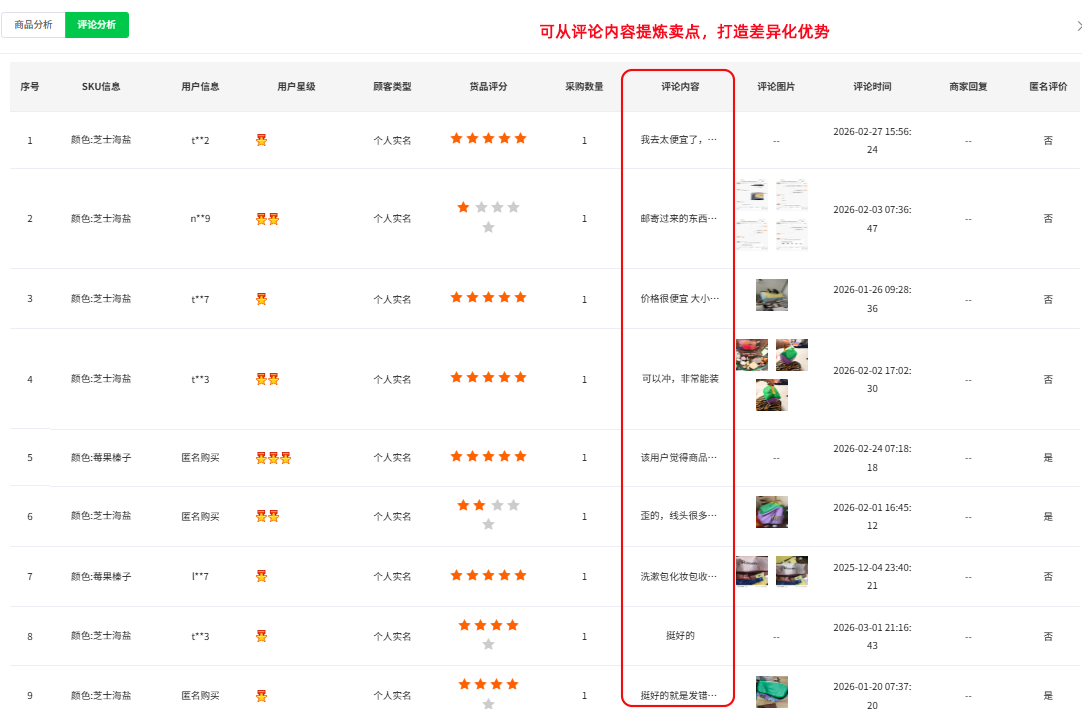
DianLeida suggests: Use the product analysis tool to examine sales revenue over the last 30 days, as well as trend charts spanning the past six months or a year. This provides a visual comparison of daily sales fluctuations to identify any abnormal volatility. Additionally, it is best to perform a review analysis to verify the product's actual performance while extracting key selling points to create a competitive, differentiated advantage.
Step 3: Final Judgment and Locking in High-Potential Products
After the first two rounds of filtering, we typically conduct a multi-dimensional data review. You cannot rely on a single metric—high sales volume alone doesn't necessarily mean a product is a winner. Only when both sales volume and trend consistency meet our criteria will a product be prioritized. We then perform a comprehensive potential assessment on the remaining items, usually narrowing the final selection down to 10–20 products.
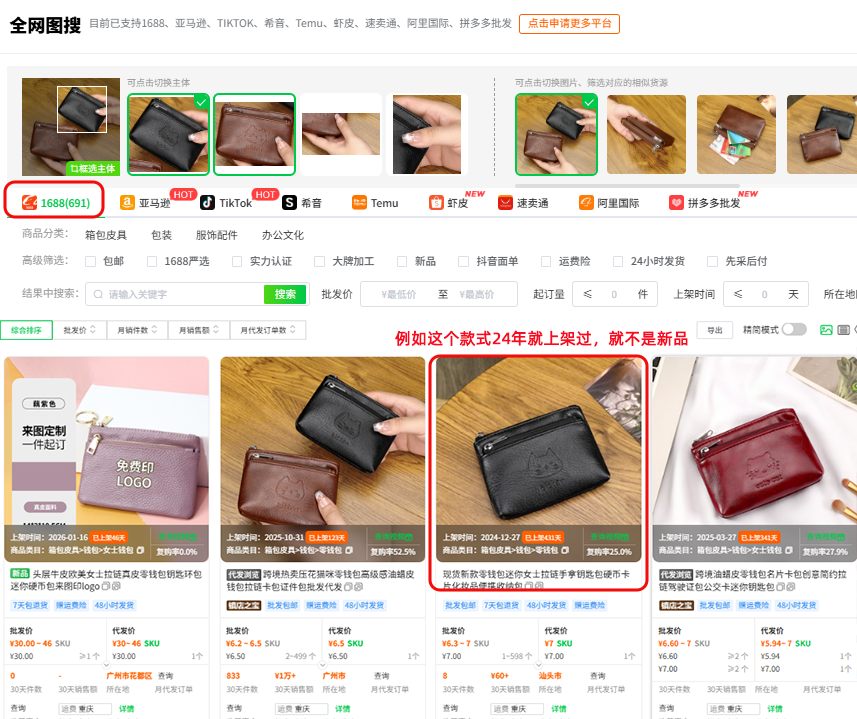
DianLeida suggests: When analyzing product data, focus on core indicators such as transaction count, sales revenue, and repurchase rates. Prioritize high-quality items with strong sales and sustained growth trends. Additionally, use the cross-platform image search feature to check the number of identical items on the market. By combining this with the listing date, you can gauge the level of competition and quickly distinguish between new arrivals, high-potential "sleepers," and simple market-following products.
Step 4: Leveraging In-house Advantages to Finalize Product Development
Finally, the team evaluates competitive advantages based on dimensions such as production capacity, cost control, and supply chain compatibility. If a cost advantage or potential for differentiation is confirmed, an analysis report is submitted to the company. Arrangements are then made to officially enter the market for that product in the following quarter, proceeding with sampling, stockpiling, and other follow-up tasks.
That concludes today’s customer case study. We hope it provides a valuable reference for your own operational strategies. If you have operational insights, practical tips, or real-world experiences you’d like to share, feel free to join the discussion in the comments section or join our merchant community to exchange ideas. Let’s grow and succeed together!


Please specify source if reproducedForget Everything You Know: How 1688 Suppliers Redefined Product Selection for 2X Profit | 2345Nav toolset